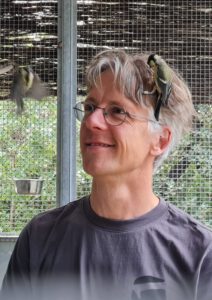
Researcher (CR1), CNRS
Samuel Caro is mainly interested in the physiological mechanisms through which animals perceive and respond to their environment. His research mainly builds on experimental approaches to investigate how biological clocks and environmental cues, including plant odours and climatic conditions, influence seasonal timing and metabolism in birds. Within the CEFE Tit Project, he has contributed to research on mate choice, environmental effects on reproduction, and the phenotypic divergence of urban and forest great tits.

Research Director (DRCE), CNRS
Anne Charmantier is an evolutionary ecologist interested in the evolution and quantitative genetics of natural populations. Her research focuses on individual variation in morphology, behaviour and life-history traits, and on the mechanisms underlying their genetic and environmental determinants. Using long-term studies of blue tits and great tits, she investigates how climate change, urbanisation and other environmental changes affect phenotypic variation, fitness and evolutionary responses in wild populations.
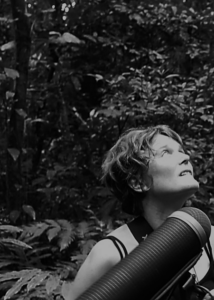
Research Director (DR2), CNRS
Claire Doutrelant is interested in the evolutionary ecology of life-history traits, with a particular focus on social behaviour, communication and sexual selection. Her research on blue tits has explored the evolution and function of plumage coloration in both sexes, including how ornaments signal individual quality and how sexual and social selection shape their variation. She has initiated a long-term monitoring of blue tit plumage colouration, providing a unique dataset for studying how environmental variation influences colour traits and their relationship with fitness.
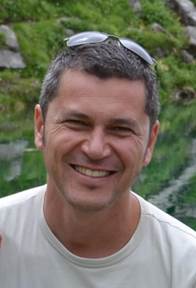
Associate Professor (MdC), Montpellier University
Arnaud Grégoire studies behavioural and evolutionary ecology, with a particular interest in animal communication, sexual selection and adaptation to human-altered environments. Using blue tits and great tits as major study models, his research investigates the evolution and function of sexual and social signals, including plumage and eggshell coloration, as well as the effects of urbanisation on reproduction, phenotype and adaptive potential. His work combines long-term field studies with experimental approaches to understand how birds respond to environmental change.

Research Director (DR1), CNRS
Marcel Lambrechts studies the causes and consequences of nest construction and egg laying in Paridae. His research investigates how nest design and reproductive traits are shaped by biotic and abiotic constraints, including nest-box characteristics, climate and parental attributes. His long-term work on blue tits and great tits has contributed to understanding how nest-site conditions, nest architecture and environmental variation interact with reproduction and breeding success.

Professor (Prof), Québec University
Denis Réale studies individual behavioural differences and their ecological and evolutionary consequences, with a particular focus on animal personality, life-history traits and behavioural plasticity. His research combines field experiments, quantitative genetics and long-term monitoring to understand how environmental conditions shape behavioural variation and how such variation can be maintained by natural selection. Within the Tit Project, he has investigated the environmental and genetic basis of personality differences in blue tits living in contrasting environments.

Research Director (DR2), CNRS
Céline Teplitsky studies the mechanisms that generate and maintain phenotypic variation, and the potential for populations to adapt to environmental change. Her research lies at the interface between evolutionary and conservation biology, with a particular interest in the genetic and ecological factors that promote or constrain adaptation. She combines long-term demographic data and quantitative approaches to investigate how variation in life-history traits evolves in natural populations and how populations may respond to changing environments.