Impact of anthropogenic nocturnal pollution on biological rhythms
Abstract
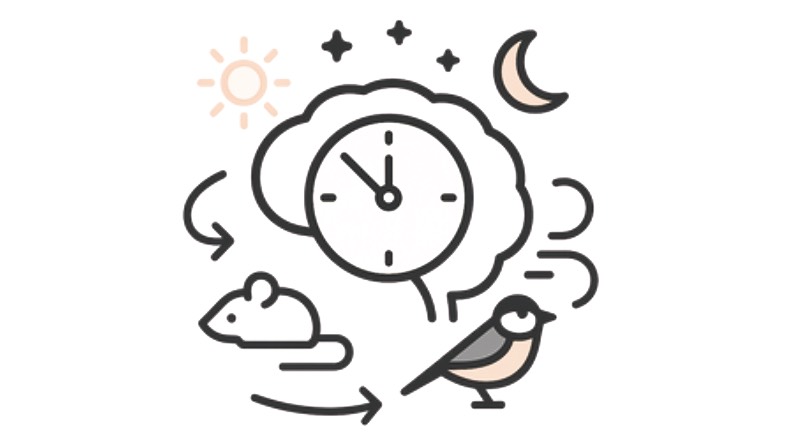
The expansion of human activities into the nighttime raises issues related to both public health (such as anxiety, depression, metabolic, and cardiovascular disorders linked in particular to night work) and the environment (disruption of numerous wild animal species, especially in large, constantly expanding urban centers). The root of these issues lies in the fact that humans and wild animals possess an autonomous rhythmicity, shaped over the course of evolution to align with our planet’s 24-hour rotation cycle. These circadian clocks are robust, but perhaps not entirely rigid… thus offering the possibility of adapting natural rhythms to the functioning of our modern societies. To understand whether and how such adaptations are possible—and whether it is feasible to help people with these disorders—we must first examine the extent to which our clocks and those of animals are adaptable. We therefore propose two approaches that will simultaneously examine the physiological and behavioral impacts of disruptions to the day-night cycle, as well as the mechanisms involved at the brain level, in order to assess to what extent these effects might be reversible—and how. In the first approach, we will examine the consequences of alterations in day-night cycles on the behavior and physiology of two widespread wild species (the house mouse and the great tit). In the second approach, we will focus specifically on the suprachiasmatic nuclei, the brain’s seat of our internal clock. We will investigate their modularity in the brains of laboratory mice in response to physiological and pathological disturbances. Finally, the two approaches will converge in a concluding chapter in which we will use the insights gained from our work on laboratory mice to describe, for the first time, the mechanisms at work in our two wild species.
Main people involved
PI: Samuel Caro, Xavier Bonnefont
PhD student 1: Jeanne Chaupitre
PhD student 2: Maxence Boissonnade
Collaborators: Anne Charmantier, Barbara Tomotani.